

Building a Salt Room at Home: 2026 Costs, Required Materials, and 7 Common Mistakes
"Can I have a small salt room built in my home?" This is the question we have received most often over the last few years. Some of our customers want to transform an empty room in their attic, others their old cellar in the basement, and some a corner of their child's playroom. Our answer is short: Yes, it is possible. But if not planned correctly, within a few months the bricks will sweat, the floor will harden, metal components will rust, and the room will not meet expectations.
As a team that has been building salt rooms for 17 years, in this article, we explain how the construction of a home salt room works, which materials are needed and in what quantities, and the mistakes we encounter most frequently in the field.
Decide First: A Decorative Salt Room or a Halotherapy Room?
Most people who want to have a salt room built at home confuse these two concepts. The difference directly affects the budget and the installation.

Decorative salt room: The walls are built with Himalayan salt bricks, backlit, and salt is laid on the floor. With its warm light, natural texture, and silence, it is a beautiful area for resting, reading a book, or meditation. However, salt brick on its own does not release a measurable amount of salt particles into the air.
Halotherapy room: A halogenerator is added to the decorative room. This device grinds dry salt to the micron level and releases it into the air. The environment in salt caves can only be imitated this way. Studies on the effect of halotherapy on respiration are ongoing, and the results vary from person to person. We recommend that those with asthma, COPD, or other chronic conditions consult their doctor before using the room.
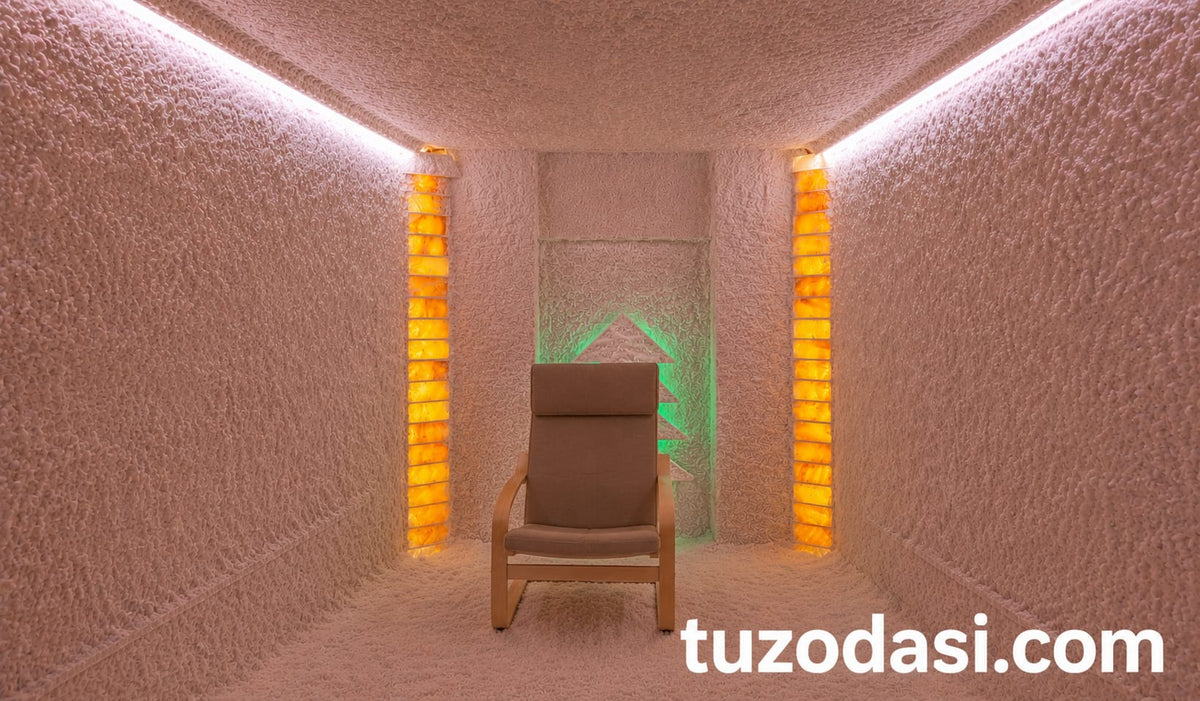
In short, if your goal is a peaceful resting corner, a decorative room is sufficient. If you want a salt therapy experience, include the halogenerator in the plan from the start. Adding it later means re-opening the electrical and ventilation installations.
How to Choose a Suitable Area for a Salt Room at Home?
Not every room is suitable for a salt room. Here are the three things we look at first when we visit homes for an inspection:
- Humidity: Salt absorbs moisture from the air. If the ambient humidity is constantly above 60 percent, sweating and dripping will occur on the bricks. Rooms next to bathrooms, damp basements, and poorly ventilated cellars are therefore risky. A dehumidifier should be used if necessary.
- Size: It works comfortably in home-type rooms between 4 and 10 square meters. In smaller areas, covering one wall with salt bricks and creating a salt corner also gives good results.
- Electricity and ventilation: Sockets and cable routes on the wall are required for backlighting and the halogenerator. It is important that the room can be closed so that the salt does not escape during a halotherapy session.
Which Material is Needed and How Much?
The calculations below are for informational purposes. We determine the exact amount after seeing the dimensions of the room and the design.
Himalayan salt brick for the wall
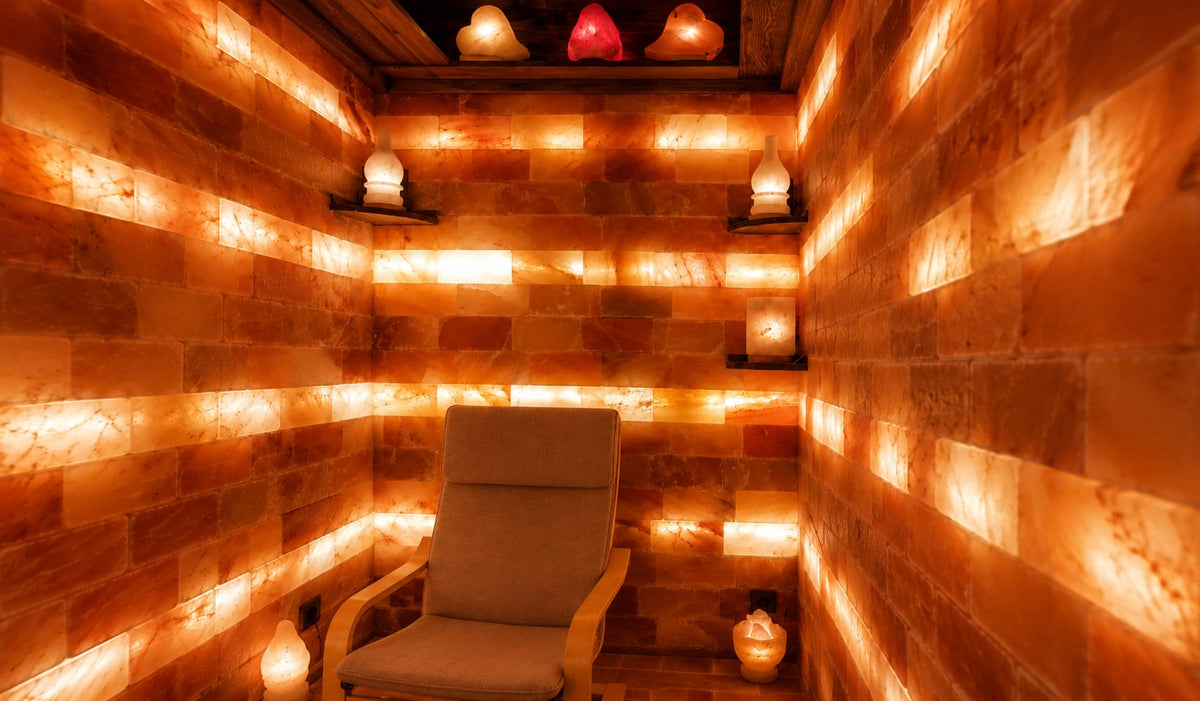
The front face of a 20x10 cm brick is 0.02 square meters. That is, about 50 bricks are needed for 1 square meter of wall. We recommend buying 5 to 10 percent extra for breakage. Thickness selection is made as follows:
- 20x10x5 cm salt brick: Can be built like a load-bearing wall with its own weight; it gives a darker and deeper color when lit from behind.
- 20x10x2.5 cm salt brick: Adhered to the existing wall as a cladding. It is lighter, allows more light through, and is the most preferred size for home installations.
Floor salt for the floor
Let's assume salt is laid on the floor at a thickness of 3 cm. About 35-40 kg of salt is needed for 1 square meter, which is several 25 kg sacks. Fine Himalayan floor salt is used in areas where you will walk barefoot, and rock salt is used where a more natural and coarse look is desired.
Halogenerator (optional)
If you are planning a halotherapy room, the capacity of the device is chosen according to the room volume. The salt used for the device is different from the salt on the wall or floor. This salt must be dry, pure, and specially ground.
What Does the Cost of a Home Salt Room Depend On?
There is no single answer to the question "How much is it per square meter?" because there are several variables that determine the price:
- Wall area to be covered: Are all four walls being covered, or just one showcase wall?
- Brick thickness: 5 cm bricks are both more expensive and heavier than 2.5 cm bricks.
- Lighting: There is a significant difference between simple LED strips and adjustable color systems.
- Floor: Will salt be spread just in one corner or over the entire floor?
- Halogenerator: This is often the item that most affects the total cost.
- City and workmanship: Planning the installation according to the province you are in.
You can find the current price per square meter and the scope on our Decorative Salt Room Construction for Home page. If you send the dimensions of your room and a few photos, we will prepare a personalized offer for you.
7 Mistakes We See Most Often in the Field
When we go to service rooms built by other companies or built DIY, most of the problems we encounter are the same:
- Choosing a damp room. Salt sweats, and white marks and drips form on the wall. Measuring humidity for a few days before construction solves this problem from the start.
- Using table salt or iodized salt. Some people buy table salt for the floor because it is cheap. This salt clumps quickly, hardens, and creates dust.
- Leaving metal parts unprotected. Salt causes nails, screws, hinges, and socket covers to rust in a short time. Stainless or plastic materials should be preferred.
- Using heat-generating lamps. Old-style lamps placed behind the bricks that heat up both consume energy and can cause cracks in the bricks. LEDs should be used for backlighting.
- Choosing the wrong adhesive. Not every adhesive is compatible with salt. The wrong product will cause the bricks to fall off over time.
- Spreading the floor too thin. 1-2 cm of salt scatters within a few weeks and the floor underneath becomes visible.
- Expecting therapy for a room without a halogenerator. A decorative room is a beautiful resting area, but it is not realistic to expect the effect of a salt cave without a halogenerator.
How to Maintain a Salt Room?
A well-built home salt room requires little maintenance:
- Bricks are not wiped with a wet cloth; dust is removed with a dry and soft brush.
- The salt on the floor is aerated and leveled with a rake once a month. Contaminated parts are removed and replaced with new ones.
- Liquids such as tea or coffee are not brought into the room. Spilled liquid melts the salt and leaves a mark.
- Keeping the room closed during rainy and humid periods or running a dehumidifier prevents the bricks from sweating.
Frequently Asked Questions
How many days does it take to build a salt room at home?
Brick cladding, lighting, and floor application in a 4-10 square meter room are usually completed within a few days. The duration depends on the condition of the wall, electrical work, and whether or not there is a halogenerator.
I am a tenant, can it be disassembled later?
Since 2.5 cm bricks are applied to the existing wall as cladding, they can be removed. However, it should be taken into account that the adhesive may leave marks on the wall. For tenants, free-standing salt panels or a salt corner are a more practical solution.
Can a salt room be built in a child's room?
Yes, this is one of our most requested applications. For children, we prefer fine-grained salt on the floor, a cornerless design, and low-heat lighting. We have explained this topic in detail in our article on salt room manufacturing for children.

How long should one stay in a salt room?
There is no time limit in a decorative room; it can be used like a lounge. Sessions performed while a halogenerator is running are generally kept between 20 and 45 minutes. Those with health problems should determine the duration with their doctor.
The First Step to Getting a Salt Room for Your Home
Send us the width, length, and ceiling height of your room, a few photos, and which city you are in. Let us clarify together which wall will be covered, how much material is needed, and whether a halogenerator is necessary for you. For details and current pricing, you can visit our Decorative Salt Room Construction for Home page or reach us via our WhatsApp line.